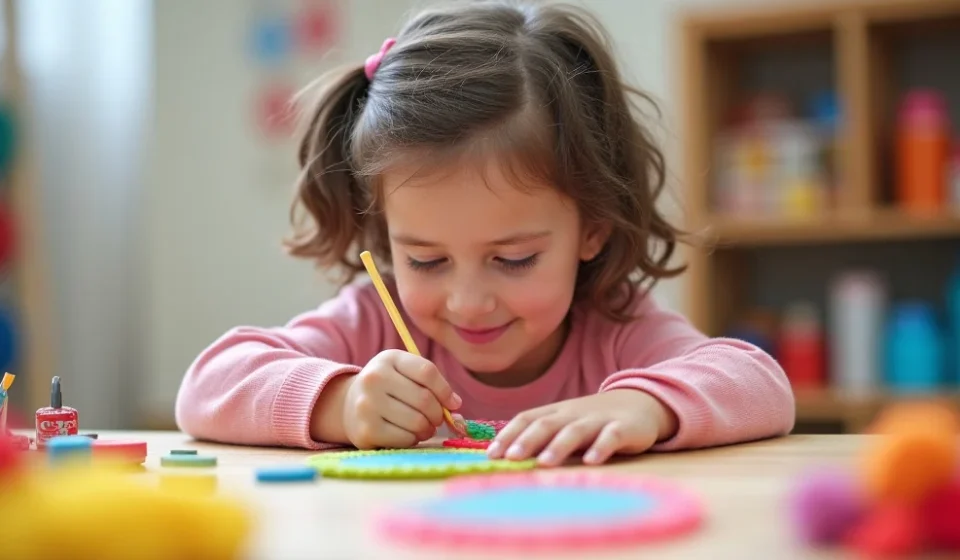

Remember that rainy Saturday when your little one declared, “I’m bored!”? The panic sets in, right? Fear not, fellow parents! This post is your go-to guide for crafting ideas for kids that will spark creativity, keep them entertained, and maybe even save you some sanity. We’ll explore various projects, from simple paper crafts to more involved activities. You’ll gain access to a treasure trove of exciting projects, ensuring you’re always prepared for those moments when inspiration is needed. Plus, we’ll cover tips to make the process enjoyable for everyone. Let’s make crafting a joy, not a chore!
Key Takeaways
- Discover a wide range of easy and engaging crafting ideas for kids suitable for different age groups.
- Learn how to select appropriate materials and tools, promoting safety and fun.
- Gain valuable tips on organizing your crafting space and managing projects efficiently.
- Explore creative project variations to keep kids interested and motivated.
- Find ways to foster creativity and imagination through art.
- Get inspiration for holiday-themed projects and themed parties.
Unleashing Creativity with Simple Paper Crafts
Paper crafts are the workhorses of kid’s activities. They’re accessible, inexpensive, and offer endless possibilities. All you need is paper, scissors, and maybe some glue or crayons. The simplicity encourages spontaneous creativity, and the cleanup is usually a breeze. These projects are perfect for toddlers and preschoolers but can also be adapted for older children.
Paper Plate Animals
Paper plates transform into an assortment of creatures! Cut, color, and add details to fashion everything from lions to ladybugs. This simple crafting ideas for kids activity is a wonderful way to introduce basic shapes and cutting skills. It’s fantastic for children to explore their artistic sides without a large commitment to a complex process. It’s also very easy to modify and allows children to make unique animals without a template.
- Use different sized paper plates to make different sized animals.
- Incorporate pipe cleaners, googly eyes, and other craft supplies.
- Create a zoo or a farm after finishing the animals.
For example, a paper plate becomes a lion by painting it yellow, adding a brown paper mane (cut from construction paper or torn from brown paper bags), and gluing on googly eyes and a paper nose. A simple ladybug uses red paint, black dots (crayons or paint), and pipe cleaner antennas. The best part? Kids can design their own animals, encouraging their imagination and problem-solving skills.
Origami Adventures
Origami, the art of paper folding, is a classic way to learn about shapes and following directions. It might seem advanced, but many origami projects are very accessible to kids. They build fine motor skills, hand-eye coordination, and patience. Start with easy models like simple boats, hats, or even the classic paper crane. There are many simple tutorials online, so it’s a great group activity that parents can join.
- Watch online tutorials together to learn new folds.
- Use colorful origami paper or decorate plain paper before folding.
- Create a “fleet” of paper boats and see whose floats the longest.
Origami helps to follow instructions carefully. The result is satisfying, and the end product is ready to be played with or displayed. For example, a simple origami boat can be created from a rectangular piece of paper. You fold it in half, then fold the top corners down, and then fold up the bottom flaps on both sides. Next, open up the boat and then push the flaps together to create the shape. The children can then float their creations in the water.
Paper Bag Puppets
Transforming ordinary paper bags into puppets is another fantastic crafting ideas for kids activity. These puppets provide endless opportunities for storytelling and creative play. Kids can draw and color, or add embellishments like yarn hair, fabric scraps for clothing, and buttons for eyes. These are perfect for younger children, but older kids can experiment with more complex designs and characters.
- Encourage children to create puppets representing characters from their favorite stories.
- Use different sized paper bags for different characters.
- Put on a puppet show for family and friends.
The process is incredibly simple: Draw a face on the bottom of the paper bag. Use markers, crayons, or paint. Glue on additional details, such as yarn hair, button eyes, or felt mouths. You can then use the puppets to create an interactive show or tell stories. The puppets can be as simple or as complex as the child wants, encouraging artistic expression.
Exploring the World of Painting and Coloring
Painting and coloring are timeless activities that foster artistic expression and color recognition. It’s a great way to help children express themselves. While the art supplies may get messy, the creative benefits make it all worthwhile. From simple finger painting to more elaborate canvas creations, there’s a painting activity for every skill level. You can adapt the materials to what you have, ensuring you use the supplies on hand.
Finger Painting Fun
Finger painting is a classic for a reason! It’s tactile, messy (in a good way!), and encourages young children to explore colors and textures. It is also an excellent activity for toddlers and preschoolers. Finger paints are typically washable, which helps with clean up. Finger painting is a perfect way to introduce art to children.
- Use large sheets of paper or even the back of a roll of wrapping paper.
- Experiment with different color combinations and mixing colors.
- Create handprint art as a fun keepsake.
Set up a designated painting area. This helps to protect furniture. Provide a variety of colors and let the child’s imagination go wild. Let children use their fingers to spread the paint and create all sorts of shapes and images. One example is to have the children create handprints using different colors. They can do their own or can be prompted to create an image, like a butterfly.
Watercolor Wonders
Watercolors introduce a more refined painting experience. They encourage children to learn about transparency, blending, and color mixing. Watercolor painting requires more control than finger painting, allowing for learning about more advanced methods. Watercolor projects provide beautiful and delicate results, making them an excellent choice for children.
- Use watercolor paper for the best results.
- Experiment with wet-on-wet and dry-brush techniques.
- Create colorful landscapes, portraits, or abstract designs.
Watercolor paints come in different forms, from pans to tubes. Provide brushes of various sizes. Teach basic techniques like how to mix colors on a palette. One example is using watercolor to paint a sunset. The children can explore blending different colors to create a beautiful image. They can see how the colors blend and how water affects the appearance of the color.
Coloring Creations
Coloring isn’t just for toddlers! Coloring books offer a fantastic opportunity for relaxation, focus, and creativity for children of all ages. Coloring encourages focus and hand-eye coordination while providing a sense of accomplishment. The market is full of coloring books featuring various themes, from simple shapes to complex designs.
- Provide a variety of coloring tools, like crayons, colored pencils, and markers.
- Encourage children to experiment with different color combinations.
- Create a coloring contest or display finished artwork.
Encourage children to personalize their coloring pages. This can be as simple as adding their names or as complex as adding their own original elements to the design. Coloring is a great activity to do with friends and family. This activity can be done while relaxing at home or waiting for appointments. Another fun project is to have a group of friends color the same picture and see how different the results are.
Crafting with Found Objects: Repurposing and Recycling
One of the best crafting ideas for kids is to teach the value of reusing materials. Using found objects is eco-friendly, budget-friendly, and encourages creativity. It’s also a way to make crafts using items usually thrown away. These activities teach children about resourcefulness and sustainability. Empty cardboard boxes, toilet paper tubes, and plastic bottles can become the foundation for amazing creations. This will make your children more aware of the materials used in the household and show them how to re-use them.
Cardboard Creations
Cardboard is one of the most versatile craft materials. From simple boxes to elaborate castles, the possibilities are endless. Cardboard provides a great surface for painting, drawing, and adding all sorts of embellishments. It’s strong and can be used to make many different things. Cardboard is also easily accessible.
- Collect cardboard boxes of various sizes.
- Use scissors, tape, glue, and paint to assemble creations.
- Build houses, cars, or even entire cityscapes.
An easy starting project is a cardboard box house. Take a medium-sized box and cut a door and windows. Then, let the children paint and decorate the house with markers, crayons, or paint. Adding furniture made from smaller boxes and other found objects can be fun. Another project is to create a car out of a large cardboard box. Paint the box, cut out a door, and add wheels made from paper plates or bottle caps. This allows children to express themselves.
Toilet Paper Tube Transformations
Toilet paper tubes are simple and versatile. They are a staple of many crafts because of their simplicity and ease of use. These tubes are easy to find and can be transformed into animals, characters, or even decorative items. The tubes are cylindrical, so many designs are possible. This is also a perfect example of a material that can be repurposed.
- Cut, fold, and decorate tubes to create animals like cats, dogs, or owls.
- Create pencil holders or organizers.
- Make colorful paper tube garlands for decorations.
Transforming toilet paper tubes into animals is simple. Paint the tube and then add details like ears, eyes, and noses using construction paper, markers, and glue. For example, a tube can become an owl by painting it brown, gluing on paper wings, and adding googly eyes and a paper beak. This simple craft allows for a lot of creative freedom for the children.
Plastic Bottle Projects
Plastic bottles, often discarded, can be turned into something amazing. Children can learn about the importance of recycling and the creative ways to reuse things. These projects can range from simple planters to more complex sculptures, providing both artistic and educational value. It provides a way to reduce waste while encouraging the children’s imaginations.
- Use plastic bottles as planters for small plants or flowers.
- Create bird feeders by cutting and decorating bottles.
- Build sculptures using multiple bottles and other found materials.
To create a simple plastic bottle planter, cut the top of a plastic bottle. Decorate the bottle with paint or markers, and then add soil and a small plant or flower. For a bird feeder, cut holes in a bottle, add perches (like popsicle sticks), and fill it with birdseed. These projects are a fun way to bring nature into your house.
Fun with Beads and Jewelry Making
Beads and jewelry-making encourage children to use their fine motor skills while exploring design and color. Beads can make everything from simple bracelets to elaborate necklaces. It provides a creative outlet for self-expression, and the finished products make unique gifts or accessories. The materials are easy to work with and also inexpensive. This can also provide a great opportunity to explore colors and patterns.
Beaded Bracelets and Necklaces
Beaded jewelry is an accessible and rewarding activity. It provides an immediate sense of accomplishment. Children can learn about patterns, color combinations, and design. Beads are inexpensive and easy to find, making them ideal for kids. The activity builds hand-eye coordination and fine motor skills.
- Use a variety of beads of different sizes, shapes, and colors.
- Try using elastic string or yarn to thread the beads.
- Create bracelets for themselves, friends, or family.
Start with simple patterns, then move to more complex designs as the child gets more experience. For example, have children create a bracelet using a single color of beads or a simple pattern, like red-blue-red-blue. To create a bracelet, cut a piece of elastic string slightly longer than the child’s wrist. Tie a knot at one end. Thread the beads onto the string in the desired pattern, and then tie the ends of the string together.
Friendship Bracelets
Friendship bracelets are a classic craft, teaching children about patience, perseverance, and the importance of following instructions. While it takes practice, the reward is a beautiful bracelet that can be shared with a friend. This can teach them to be more aware of their friends and make a handmade gift that is from the heart. They also make a fantastic gift to exchange.
- Use embroidery floss in various colors.
- Learn different knotting techniques, like the basic forward knot.
- Create bracelets for friends or family members.
Embroidery floss is a perfect material. It comes in a wide variety of colors. Friendship bracelets involve knotting the threads in a specific pattern to create the design. There are many simple tutorials online that will explain the process. Children can learn to make simple patterns like a basic stripe design or can graduate to more complex patterns. The children can create bracelets for themselves or as gifts to give to friends.
Bead Animals and Figures
Beads can be used to make figures, such as animals. Children can create small animals or other figures that are unique and artistic. The small size makes them perfect to keep. The result is a unique creation that the children can feel proud of.
- Use pipe cleaners as a base and thread beads onto them.
- Create three-dimensional figures.
- Encourage children to use their imagination and create unique bead animals.
To start, bend a pipe cleaner into the shape of the animal’s body. Thread beads onto the pipe cleaner to create the body. Use different-colored beads for the animal’s details, such as eyes, ears, and paws. Encourage the children to use their imaginations when deciding the color and how to put the different details on the animal. This is a very creative and fun activity.
Embracing the Holiday Spirit with Themed Crafts
Holiday-themed crafts can make any holiday memorable. Themed activities are also a fun way to keep children engaged, and they create special keepsakes. From decorating the house to making gifts, these projects bring the whole family together and celebrate the season. It is also a way to make unique memories that will last a lifetime.
Halloween Crafts
Halloween crafts are exciting. They allow children to embrace the spooky and fun aspects of the holiday. With projects ranging from paper plate bats to spooky spider webs, there are activities for all ages. These crafts are ideal for decorations or making treats. They are a perfect opportunity for the whole family to come together.
- Make paper plate ghosts, bats, and spiders.
- Decorate pumpkins with paint, markers, or stickers.
- Create spooky decorations for your home or yard.
A fun and easy project is to paint paper plates white and then add black marker eyes and mouth. These ghosts can be hung up with string. You can decorate pumpkins without carving them. Use paint, markers, or stickers to create all sorts of designs. These can be displayed as decorations, adding to the atmosphere.
Christmas Crafts
Christmas crafts are a great way to celebrate the holiday season. The projects vary in difficulty, so there is something for all ages. Many projects are perfect for decorating your house. They provide children with a sense of pride when displaying their own decorations. Crafts can also be given as gifts, making the holiday more personal.
- Make paper snowflakes to decorate windows or walls.
- Create Christmas ornaments from various materials.
- Design and make Christmas cards for family and friends.
Paper snowflakes are a classic Christmas craft that’s easy and fun to make. Fold a piece of paper, cut out shapes, and then open it up to reveal a unique snowflake design. Christmas ornaments can be made from many different materials, like construction paper, beads, or felt. This is a great way to decorate your Christmas tree. Finally, create a card with your friends and family in mind, encouraging the children to express themselves.
Easter Crafts
Easter crafts are a great way to celebrate spring. They bring the colors and themes of the holiday to life. From creating Easter baskets to decorating eggs, these projects are fun and perfect for the season. This is also a perfect time to celebrate the season and add creative, personalized touches to your home.
- Decorate Easter eggs using dyes, markers, or paint.
- Make Easter baskets from paper plates or construction paper.
- Create Easter-themed decorations for your home.
You can decorate Easter eggs in a variety of ways. Use dyes, markers, or paint to make beautiful patterns. You can also create Easter baskets out of paper plates or construction paper. These can be used to collect treats during an Easter egg hunt. Decorate your house with colorful creations. The children will be happy to show off their finished creations to their friends and family.
Common Myths Debunked
Myth 1: Crafting is Only for “Creative” Children
In reality, crafting ideas for kids are beneficial for every child, regardless of perceived artistic ability. The process of following instructions, making decisions, and problem-solving enhances skills for all children. It’s about the process and experience, not just the end product.
Myth 2: Crafting Requires Expensive Supplies
You do not need many or expensive supplies to craft. Many projects use materials already on hand, like paper, cardboard, and found objects. Using everyday materials will help to create amazing things. This is a great way to introduce your children to the importance of recycling and the environment.
Myth 3: Crafting is Too Messy and Time-Consuming
While some crafts do get messy, the benefits outweigh the inconvenience. Moreover, many crafts are quick and simple. Have an organized workspace and simple clean-up plan, and the experience will be more enjoyable for all involved.
Myth 4: Crafting is Only for Girls
Art and crafts are for every child. Children of any gender can express their creativity and try different projects. Crafting is a great way to practice fine motor skills, and it is a good way to explore various interests.
Myth 5: Crafts Are Just Busy Work
Crafting helps with many skills beyond just keeping the children busy. They foster creativity, hand-eye coordination, and problem-solving skills, and encourage children to try different ideas. They also help improve confidence and encourage the children to have fun.
Frequently Asked Questions
Question: What age is best for starting crafting?
Answer: Children of any age can start crafting, but the projects should be suitable for their abilities. Simple projects like finger painting are perfect for toddlers, while older children can follow more complex instructions.
Question: How can I encourage my child to try new crafts?
Answer: Let your child choose the activity, create a fun crafting space, and offer plenty of encouragement. Make sure the child knows that it is okay to make mistakes. Praise the effort, not just the outcome.
Question: Where can I find more crafting ideas?
Answer: Libraries, online craft blogs, and Pinterest are excellent sources of inspiration. Consider joining local craft groups or taking classes together.
Question: How do I handle messes when crafting?
Answer: Designate a specific crafting area covered with a tablecloth or mat. Provide aprons for the children. Have the children help with the cleanup, teaching them responsibility.
Question: How do I ensure safety when crafting?
Answer: Always supervise children when using scissors, glue, or other potentially hazardous items. Make sure your child’s crafting station is safe, and use only non-toxic materials. Teach them how to use tools properly and safely.
Final Thoughts
Crafting is more than just a pastime; it’s a gateway to creativity, learning, and fun for kids. It gives children the opportunity to try new things and make their own designs. From simple paper creations to more complex projects, crafting helps children develop important skills. These projects help children to express themselves. The ideas listed here provide a good foundation for hours of creative exploration. So, grab your supplies, gather your children, and get ready to create lasting memories. Now, go find some crafting ideas for kids and turn those “I’m bored” moments into opportunities for creativity!