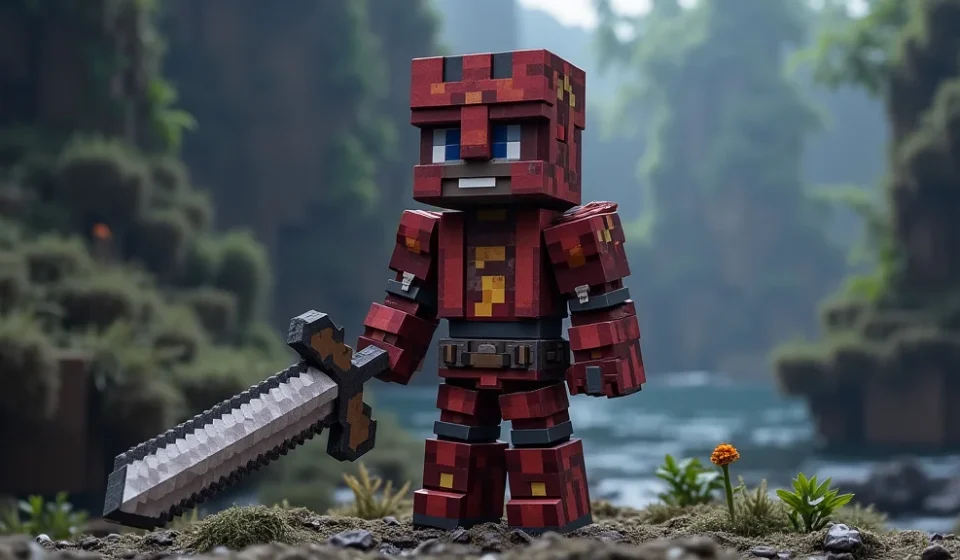

Remember the first time you found a diamond? The thrill of finally having the resources for your first full set of armor? Now imagine that, but with a material even more resilient. I recall spending hours in my first Minecraft world, desperately searching for those precious diamonds to protect myself. Learning about crafting netherite armor was a game changer for me. This guide will provide everything you require, from finding the raw materials to creating the ultimate defense. You’ll gain a thorough how-to, boosting your gameplay. Plus, you’ll learn tricks to avoid common pitfalls. Get ready to level up your survival game!
Key Takeaways
- Learn the process of locating ancient debris, the core ingredient for netherite.
- Discover how to smelt ancient debris into netherite scraps.
- Find out how to combine netherite scraps with gold ingots to create netherite ingots.
- Understand the process of upgrading your diamond gear into netherite armor.
- Gain knowledge about the unique properties and advantages of netherite gear.
- Get tips on maintaining and optimizing your netherite armor for peak performance.
Unearthing Ancient Debris
The journey to crafting netherite armor begins in the dangerous Nether dimension. This isn’t a stroll in the park; you’ll face lava oceans, hostile mobs, and treacherous terrain. The primary resource you’re after is called ancient debris, a rare ore found deep within the Nether. It looks like a darker, more rugged version of other ores.
Ancient debris is tough to find, requiring persistence. You’ll need a diamond or netherite pickaxe to mine it. While you can find ancient debris at any height, the best elevation is typically between Y-level 8 and 22. This area offers the highest concentration. Using a bed to blow up the area is a popular tactic for finding ancient debris, though it can be risky. You’ll also need to be aware of your surroundings, as this method destroys the blocks around you, including the ore you are searching for. Plan carefully before attempting this, as explosions can quickly get you killed.
Finding Ancient Debris: A Detailed Guide
Finding ancient debris effectively is a mix of luck, strategy, and preparation. Several strategies help in boosting your chances of locating this valuable resource. Remember to bring plenty of supplies! Here’s a breakdown of helpful strategies:
- Strip Mining: Strip mining is the simplest and most common method. Dig long tunnels at Y-level 15, branching out in all directions. Make sure you leave one block of space between the tunnels so you don’t miss any debris.
- Bed Mining (Use with Caution): Place beds and repeatedly use them to explode the area around you. This is very efficient for clearing large areas but can be deadly. Be sure to clear out space before using this method.
- Blast Mining: Use TNT or other explosives to clear large areas quickly. This method is effective for uncovering hidden debris, but it’s important to be careful, as explosions can destroy the debris itself.
- Branch Mining: Dig a central tunnel and create multiple branches, spaced a few blocks apart. This method lets you cover a large area. Remember to place torches or other light sources to prevent mobs from spawning in the tunnels.
- Exploration: Simply explore the Nether. While less efficient, exploring can lead to unexpected discoveries. Keep an eye out for exposed debris in caves.
It’s important to remember that ancient debris won’t always be directly visible, as it can be hidden within blocks. Pay close attention to block textures and lighting changes, as these can give away the presence of valuable ore. Make sure to have a strong pickaxe ready to mine any debris you find.
Essential Tools and Preparation
Before you even think about entering the Nether, you’ll need the right tools and gear. Being prepared is a major factor in surviving. Entering the Nether without preparation means quick death. Here’s a list to get you started:
- Diamond or Netherite Pickaxe: This is crucial for mining the ancient debris.
- Diamond or Netherite Armor: Protect yourself from mobs and lava.
- Fire Resistance Potions: These can save your life.
- Water Buckets: Useful for putting out fires and creating safe passages.
- Food: Keep your hunger bar filled.
- Torches or Other Light Sources: Prevent mobs from spawning.
- A Way to Get Back: A Nether portal is essential for returning home.
Having a full set of diamond armor is essential. Since diamond armor is the best armor you can get before netherite armor, it is important to have it on before you enter the Nether. Fire resistance potions are extremely helpful when mining for ancient debris. They will allow you to survive being near lava and greatly increase your survival rate. With a proper set of tools and preparations, you will greatly increase your chances of getting netherite armor.
Smelting and Crafting Netherite Ingots
After finding ancient debris, the next stage is transforming it into netherite ingots. This involves two steps: smelting the ancient debris into netherite scraps, and combining those scraps with gold ingots to create netherite ingots.
Firstly, the ancient debris must be smelted in a furnace. Any fuel will work, but using coal or wood will be slow. If you want to speed up the process, you could use a blast furnace. A blast furnace is twice as fast as a regular furnace. After smelting, you’ll receive netherite scraps. The quantity of netherite scraps per piece of ancient debris is always one. Next, you combine the scraps with gold ingots. The crafting recipe requires four netherite scraps and four gold ingots to craft a single netherite ingot.
The Smelting Process Step-by-Step
Smelting is a simple but important process. It directly turns ancient debris into a usable form. Here’s what you need to do:
- Place the Ancient Debris: Put the ancient debris in the top slot of either a furnace or a blast furnace.
- Add Fuel: Put a fuel source in the bottom slot. This could be coal, wood, or another fuel source.
- Wait: The smelting process begins, and the ancient debris gradually turns into netherite scraps.
- Collect the Scraps: Once the smelting is finished, collect the netherite scraps from the output slot.
Blast furnaces are faster and are highly recommended. A blast furnace is ideal for this process, as it cuts the smelting time in half. You’ll want to have several blast furnaces, especially when you are smelting multiple pieces of ancient debris. This will save you time in the long run.
Crafting Netherite Ingots
Once you have your netherite scraps, you’re ready to create netherite ingots. This step requires a crafting table and a bit of organization.
- Obtain Gold Ingots: You’ll need four gold ingots to make one netherite ingot. Gold ingots can be obtained by smelting gold ore.
- Access a Crafting Table: Place a crafting table down and interact with it to open the crafting grid.
- Arrange the Ingredients: Place four netherite scraps and four gold ingots in any order within the 3×3 crafting grid.
- Craft the Ingot: The netherite ingot will appear in the result slot. Collect it, and you’re one step closer to your upgraded gear!
Creating netherite ingots requires a bit of planning. The number of ingots you need will depend on your goal. Ensure you have plenty of gold ingots ready to avoid pauses in your crafting. With your newly created netherite ingots, you’re ready to upgrade your diamond gear.
Upgrading to Netherite Armor
Once you’ve crafted your netherite ingots, the last step is to upgrade your diamond armor. This procedure transforms diamond armor into its netherite counterpart. The upgrade process is simple, but requires a smithing table.
To start, place the smithing table. Next, place the diamond armor piece, and a netherite ingot, in the designated slots. This process upgrades the diamond armor to netherite armor. There are no other materials needed to upgrade the armor. Unlike crafting new armor, you only need one ingot per armor piece. You must upgrade each piece individually to have a full set. Now you can enjoy the many benefits that netherite armor provides.
Using a Smithing Table to Upgrade
The smithing table is the tool needed for upgrading to netherite armor. It replaces the crafting table for this specific procedure. Here’s a step-by-step procedure:
- Place the Smithing Table: Place the smithing table on the ground and interact with it.
- Place Diamond Armor: Place the diamond armor piece in the first slot in the smithing table interface.
- Add a Netherite Ingot: Place a netherite ingot in the second slot.
- Craft the Armor: The resulting upgraded armor will be visible in the output slot. Collect your new netherite piece!
This method works for helmets, chestplates, leggings, and boots. You’ll need one netherite ingot for each piece of diamond armor. This simple process allows you to upgrade your gear into its more advanced form. This also saves the enchantments you already have on your diamond armor. Be sure to check that your armor is enchanted before upgrading. If your armor is not enchanted, then it will not keep the previous enchantments.
The Benefits of Netherite Armor
Crafting netherite armor gives you a substantial advantage. It offers several benefits over diamond armor, improving your survival. Having netherite armor is a sign that you have advanced in the game. Here’s what makes netherite armor better:
- Increased Durability: Netherite armor has a higher durability stat than diamond armor, meaning it takes longer to break down.
- Knockback Resistance: Netherite armor provides knockback resistance, reducing the distance mobs can knock you back. This can be very useful when fighting against mobs.
- Lava Resistance: Netherite gear floats in lava. This can save you from death if you fall into lava.
- Higher Armor Toughness and Armor: Netherite provides higher armor values and toughness, decreasing damage.
- Enchantment Retention: Your armor’s enchantments transfer when upgraded from diamond to netherite.
Netherite armor will also save you time in the long run. By not having to repair your gear as often, you can focus on other tasks. The improved armor and toughness greatly enhance your survivability. In short, netherite armor makes you a tougher opponent in the world of Minecraft.
Maintaining and Optimizing Netherite Armor
Obtaining netherite armor is only half the battle. To keep it in peak condition, you need to maintain it. Repairing your gear is easy, and you’ll want to have the right enchantments. Properly maintaining your armor can greatly increase its lifespan.
Repairing netherite armor is simple, requiring either the use of an anvil or a crafting table. You can use netherite ingots to repair armor on an anvil, or you can combine two pieces of the same type of armor in a crafting table to combine their durability. Enchanting your netherite armor can provide extra protection and benefits. Make sure to choose enchantments carefully. Proper maintenance and optimization will guarantee your armor is ready for anything.
Repairing Netherite Armor
Even the strongest armor will take damage. It is a good practice to repair your armor regularly to make it last longer. Here are the simple methods to do so:
- Repairing with an Anvil: Place the netherite armor in the first slot of an anvil and add a netherite ingot in the second slot. This method repairs a single armor piece.
- Combining in a Crafting Table: Place two pieces of the same type of armor in the crafting table grid. The resulting armor piece will have the combined durability of both.
When using an anvil, remember the cost of the repair. Repeated repairs increase the cost. Combining armor is the most cost-effective solution, especially if you have multiple pieces of armor that need repairs. Use these options regularly to keep your gear in top condition.
Enchanting Your Armor
Enchanting adds additional benefits to your armor. Choosing the right enchantments can boost your protection. Consider enchantments that align with your playstyle and common threats in your game. Here are some ideal enchantments:
- Protection: This enchantment decreases all types of damage.
- Mending: This enchantment repairs armor using experience orbs.
- Unbreaking: This enchantment increases the armor’s durability.
- Thorns: This enchantment reflects damage back to attackers.
- Feather Falling: This enchantment decreases fall damage.
The enchantments on your armor will make a huge difference in your survival. Protection and Thorns are generally good choices. Mending will greatly increase the lifespan of your armor. Finding the correct enchantments for your armor will make you much more survivable in combat, or when exploring the world. Experiment with different combinations to find the ones that best match your gameplay.
Common Myths Debunked
There are many false facts that are often spread about the game. It is important to know the real facts. Here are a few misconceptions about crafting netherite armor:
Myth 1: Netherite Armor is Unbreakable
While netherite armor is very durable, it isn’t indestructible. It will eventually break with enough damage. Regular repairs and the use of the Unbreaking enchantment will increase your armor’s lifespan. Be sure to repair your armor regularly, so you will not be caught by surprise.
Myth 2: You Need a Netherite Pickaxe to Mine Ancient Debris
You can mine ancient debris with a diamond pickaxe. A netherite pickaxe will mine it faster, but a diamond pickaxe will do the job. The speed difference is minor, and you can still acquire netherite gear. Remember to always bring a pickaxe, even if it’s a diamond one, to mine ancient debris.
Myth 3: More Armor Always Equals More Protection
Having a full set of netherite armor is important. Armor has diminishing returns. There is a limit on the amount of damage reduction that can be achieved. It is important to know your armor’s limits so you can get the maximum advantage from it. Make sure to have a full set, as this provides maximum protection.
Myth 4: You Can Find Netherite in the Overworld
Netherite is an ore. You can only find ancient debris in the Nether. You cannot find netherite ingots or ancient debris in the Overworld. Therefore, you must always travel to the Nether to obtain it. To get netherite, you must head to the Nether. Never give up on the journey.
Myth 5: Netherite is Easy to Get
Crafting netherite armor is not easy. It involves the Nether, dangerous mobs, and a lot of time. It is important to be prepared. If you follow the correct steps, then you will be able to get netherite armor. Plan carefully and prepare yourself for your adventure.
Frequently Asked Questions
Question: How do I find ancient debris?
Answer: Ancient debris is located in the Nether. You can find it by mining, especially around Y-level 15. Make sure to be careful and bring the proper equipment.
Question: What do I need to make a netherite ingot?
Answer: You need four netherite scraps and four gold ingots to make a netherite ingot. You will need to smelt ancient debris into netherite scraps and gather gold ore for the gold ingots.
Question: Can I enchant netherite armor?
Answer: Yes, you can enchant netherite armor just like other armor. Use an enchanting table or an anvil to apply enchantments.
Question: What’s the best way to mine ancient debris?
Answer: Using TNT or beds is the fastest way to unearth ancient debris. Strip mining and branch mining are safe methods to locate the ore, with strip mining being the safest.
Question: Is netherite armor better than diamond armor?
Answer: Yes, netherite armor is superior to diamond armor. It has greater durability, knockback resistance, and is resistant to lava. It’s an upgrade.
Final Thoughts
Crafting netherite armor represents a significant achievement in Minecraft. It is a sign of your progress. By successfully finding ancient debris, smelting it into scraps, crafting ingots, and upgrading your diamond armor, you become much more equipped to face the challenges the game throws your way. The benefits are clear: increased durability, enhanced protection, and unique perks like lava resistance. It also provides a significant advantage over other players. Don’t be afraid to explore the Nether, experiment with different mining strategies, and always remember to prepare for the dangers that lie ahead. Level up your survival by making the ultimate armor.