
Remember that frustrating moment when your favorite knife felt dull as a butter knife? Or the time your woodworking chisel just wouldn’t slice cleanly? We’ve all been there. These scenarios highlight the importance of a good crafting grindstone. This guide will explore the art and science behind maintaining razor-sharp tools, ensuring you can tackle any project with confidence. By the end of this article, you’ll have the knowledge to select, use, and care for a grindstone, transforming your sharpening skills and improving your project outcomes.
Key Takeaways
- Learn the fundamental principles of sharpening with a grindstone.
- Discover how to select the right type of grindstone for various tools and tasks.
- Master the techniques for using a grindstone effectively and safely.
- Understand how to maintain and care for your grindstone to extend its lifespan.
- Explore the various grit sizes and their applications in the crafting grindstone process.
- Identify common mistakes and learn how to avoid them for superior results.
The Basics of Crafting Grindstone Sharpening
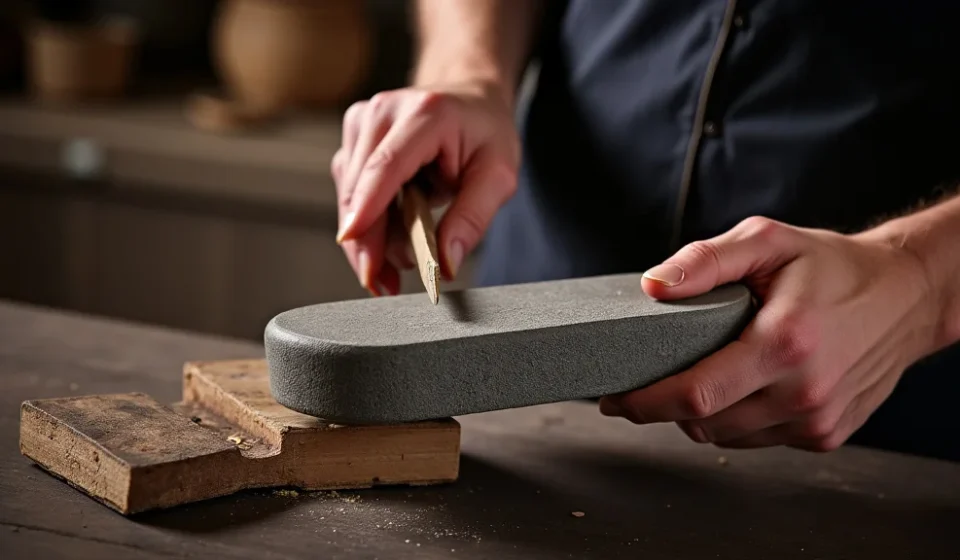
Sharpening with a grindstone is a fundamental skill for anyone who uses edged tools. It’s the process of removing small amounts of material from the cutting edge of a tool to restore its sharpness. This is achieved by grinding the tool’s edge against the abrasive surface of the grindstone. The goal is to create a keen, precise edge that will cut cleanly and efficiently. Proper sharpening not only improves the tool’s performance but also prolongs its lifespan. A dull tool requires more force to use, increasing the risk of accidents and causing unnecessary wear and tear on both the tool and the user.
The process involves several key steps. First, the tool’s bevel, the angled surface that forms the cutting edge, must be assessed. The grindstone then removes material from this bevel, reshaping the edge and removing any imperfections. The angle at which the tool is held against the grindstone is critical; maintaining the correct angle ensures the edge is sharpened consistently. Finally, the tool can be honed, which refines the edge further, removing any burrs and creating a polished finish. This process, when done correctly, transforms a dull tool into a precision instrument.
Understanding Abrasives and Grit
The effectiveness of a grindstone hinges on its abrasive material and grit size. Abrasives are the tiny particles embedded in the stone that do the actual grinding. Common abrasives include aluminum oxide, silicon carbide, and diamond. Aluminum oxide is a versatile choice, suitable for general-purpose sharpening. Silicon carbide is harder and cuts faster, making it ideal for sharpening harder steels. Diamond stones, on the other hand, are the hardest and most aggressive, excellent for very hard materials and for quickly restoring a dull edge.
Grit size refers to the coarseness of the abrasive particles. It’s measured by the grit number; a lower number indicates a coarser grit, while a higher number indicates a finer grit. Coarse grits remove material quickly, making them suitable for reshaping edges or removing significant damage. Fine grits refine the edge, leaving a sharp, polished finish. The choice of grit depends on the tool and the desired outcome. For example, a rough grit might be used to reshape a damaged axe, while a fine grit would be used for a finishing touch on a razor.
- Coarse Grit (e.g., 80-220 grit): Excellent for reshaping or repairing damaged edges. Removes material quickly.
- Medium Grit (e.g., 320-600 grit): Ideal for general sharpening and establishing a good cutting edge.
- Fine Grit (e.g., 800-1200 grit): Used for refining the edge and creating a very sharp, polished finish.
- Very Fine Grit (e.g., 3000+ grit): Used for polishing the edge to a mirror-like finish and achieving maximum sharpness.
Types of Grindstones: Natural vs. Synthetic
Grindstones are broadly categorized into natural and synthetic types. Natural grindstones are made from stone quarried from the earth, and they are valued for their unique cutting characteristics. They often produce a different feel and finish compared to synthetic stones. Natural stones can vary in composition, affecting their performance. Common examples include Arkansas stones and Japanese water stones.
Synthetic grindstones are manufactured from abrasive materials such as aluminum oxide or silicon carbide, bound together with a binder. These offer several advantages, including consistent performance, availability in various grit sizes, and affordability. They are often faster-cutting than natural stones and require less maintenance. Synthetic stones are the workhorse in many workshops, providing reliable performance for various sharpening tasks.
- Natural Grindstones:
- Offer a unique feel.
- Can provide a superior, natural finish.
- Tend to require more care and may be less consistent.
- Synthetic Grindstones:
- Offer consistent performance.
- Are available in a wide range of grit sizes.
- Are generally faster-cutting and more affordable.
Choosing the Right Crafting Grindstone for Your Needs
The best crafting grindstone for you depends on the tools you use and the tasks you perform. Different tools have different hardness levels, and the grindstone must be appropriate for the material being sharpened. A general rule is that harder tools require harder stones. Furthermore, the type of work you do dictates the grit size needed. A woodworker, for instance, has different needs than a metalworker or a knife enthusiast. Considering these factors ensures you select the most suitable grindstone to meet your needs and achieve the desired results.
For woodworking, a combination of coarse, medium, and fine grits is often necessary. A coarse grit is suitable for initial shaping or dealing with a badly damaged edge, while medium and fine grits are used for refining the edge and achieving a sharp finish. For kitchen knives, a medium grit is typically used for general maintenance, while a fine grit is used for touch-ups. For axes and other rough tools, a coarse grit is often sufficient.
Selecting the Right Grit Size
Grit size selection is a crucial aspect of choosing a grindstone. It directly impacts the speed and quality of the sharpening process. Coarse grits remove material rapidly, ideal for fixing chips or reshaping the edge of a tool. Medium grits offer a balance between material removal and refinement, making them suitable for everyday sharpening tasks. Fine grits polish the edge to a razor-sharp finish, enhancing cutting performance and durability. Using the correct grit sequence is essential for achieving the best results.
The sequence of grits is also important. Start with a coarser grit to establish the desired edge shape. Progress to finer grits to refine the edge and remove scratches left by the previous grit. The final grit choice determines the sharpness and finish of the tool. Many sharpeners use a multi-stage approach, moving from coarse to medium to fine grits to achieve the best results. This progressive process ensures both speed and precision in the sharpening process.
- Coarse Grit: Reshaping edges, removing chips.
- Medium Grit: General sharpening and edge refinement.
- Fine Grit: Polishing the edge and enhancing sharpness.
- Ultra-Fine Grit: Achieving a mirror finish and ultimate sharpness.
Material Matters: Matching Stone to Tool
Matching the grindstone material to the tool’s steel type is crucial for effective sharpening. High-speed steel (HSS) and carbon steel tools are common in various trades. HSS tools are exceptionally hard, therefore they require a harder stone like diamond or ceramic for effective sharpening. Carbon steel tools, on the other hand, are often easier to sharpen using aluminum oxide or silicon carbide stones. The goal is to choose a stone that can efficiently remove material without wearing down too quickly or damaging the tool.
For example, if you’re sharpening a chisel made of carbon steel, a water stone or an oil stone made of aluminum oxide or silicon carbide can work efficiently. If you are sharpening a drill bit made of HSS, a diamond or ceramic stone might be best. The choice of stone also depends on how frequently the tool is used and how much material needs to be removed. A good match will make sharpening easier, prevent damage to either the tool or the stone, and result in a sharper cutting edge.
| Tool Material | Best Grindstone Type |
|---|---|
| High-Speed Steel (HSS) | Diamond, Ceramic |
| Carbon Steel | Aluminum Oxide, Silicon Carbide, Water Stone |
| Stainless Steel | Aluminum Oxide, Silicon Carbide |
Techniques for Effective Grindstone Use
Proper technique is key to getting the most out of your crafting grindstone and achieving consistently sharp results. This includes maintaining the correct angle, applying even pressure, and using a suitable lubricant. The angle at which the tool meets the stone is crucial. It directly affects the sharpness and durability of the edge. Also, even pressure is important for consistent material removal and a uniform edge. Finally, using a lubricant reduces friction and heat buildup, prolonging the life of both the stone and the tool.
Practicing these techniques takes time and patience, but it is necessary to mastering the art of sharpening. Proper technique is something that is refined by constant practice. Beginners should start with inexpensive tools to gain experience before working on their prized possessions. The investment in proper technique pays dividends in the form of sharper tools and greater safety in the workshop.
Maintaining the Correct Angle
Maintaining the correct angle is the cornerstone of effective sharpening. Holding the tool at the correct angle ensures that the entire bevel is sharpened evenly. This results in a sharp, durable edge. The optimal angle varies depending on the tool and its intended use. For example, a carving knife typically has a shallower angle than a chisel. The angle should be consistent throughout the sharpening process; if the angle fluctuates, it will lead to an uneven edge.
One way to ensure that you maintain the correct angle is to use a sharpening guide or jig. These devices help hold the tool at a precise angle and can be adjusted for different tools. Another technique is to practice holding the tool freehand. This requires more skill but provides greater flexibility. The goal is to learn to consistently position the tool against the stone at the desired angle. With practice, you can sharpen tools by hand with confidence.
- Use a Sharpening Guide: Helps maintain a consistent angle.
- Practice Freehand: Develops skill and flexibility.
- Check the Angle Frequently: Ensure consistency throughout the process.
- Adjust the Angle for Different Tools: Use the right angle for the job.
Applying Even Pressure and Using Lubricants
Applying even pressure and using lubricants are vital aspects of using a grindstone. Even pressure ensures uniform material removal across the entire cutting edge, preventing any irregularities. Uneven pressure can lead to an uneven edge, which will hinder the tool’s ability to cut cleanly. The goal is to apply consistent pressure throughout the sharpening process, ensuring a smooth and sharp edge.
Using a lubricant, such as water or oil, is another key component. Lubricants reduce friction between the tool and the grindstone. They also prevent heat buildup. Excessive heat can damage the tool’s temper, which can make it softer and less effective at holding an edge. The lubricant also helps to keep the stone clean by flushing away the metal particles removed during sharpening. The correct choice of lubricant is often determined by the type of grindstone. Oil stones use oil, while water stones use water. Lubricants contribute significantly to both the life and efficiency of the sharpening process.
- Apply Even Pressure: Ensures uniform sharpening.
- Use a Lubricant: Reduces friction and heat.
- Keep the Stone Clean: Remove metal particles regularly.
- Select the Right Lubricant: Match to the stone type.
Troubleshooting Common Sharpening Issues
Even with careful technique, problems can arise while sharpening with a crafting grindstone. Common issues include an uneven edge, a rounded edge, or a dull edge that doesn’t hold its sharpness. Uneven edges are often caused by inconsistent angles or uneven pressure. A rounded edge may occur if the tool is not held firmly against the stone or if the stone has become worn. A dull edge can result from using an incorrect grit or not sharpening long enough.
These challenges are usually solvable by reviewing the technique and assessing the grindstone. For example, practicing the angle and applying even pressure can eliminate many problems. Inspecting the grindstone for wear and tear will reveal if it needs to be resurfaced or replaced. Checking the tool for any pre-existing damage is also important. Knowing these common issues helps the user adjust their technique and ensure they achieve optimal results every time.
- Uneven Edge: Inconsistent angles or pressure. Solution: Practice maintaining a consistent angle and even pressure.
- Rounded Edge: Incorrect angle or a worn stone. Solution: Check the angle and resurface or replace the stone.
- Dull Edge: Incorrect grit or insufficient sharpening time. Solution: Use the appropriate grit and sharpen until the edge is sharp.
- Burrs: Too much pressure or improper honing. Solution: Reduce pressure and hone the edge properly.
Maintaining and Caring for Your Grindstone
Caring for your grindstone is essential to extend its life and ensure it performs optimally. This involves regular cleaning, proper storage, and occasionally resurfacing or flattening the stone. Each type of grindstone, whether natural or synthetic, requires a specific approach to maintenance. Routine care not only keeps the stone in good working condition but also ensures that the sharpening process is consistent and efficient. Neglecting maintenance can lead to poor performance and premature wear.
Cleaning the stone after each use removes metal particles and prevents them from interfering with the sharpening process. Proper storage protects the stone from damage and contamination. Resurfacing or flattening the stone maintains a consistent and flat surface for sharpening. Regular maintenance also helps preserve the stone’s cutting ability and ensures that it remains a reliable tool in your workshop. A well-maintained grindstone is a valuable asset that will consistently help you achieve excellent results.
Cleaning and Lubrication Practices
Keeping your grindstone clean is essential for efficient and effective sharpening. Over time, metal particles and debris accumulate on the stone’s surface, reducing its cutting ability. Cleaning removes these particles and restores the stone’s ability to sharpen. The cleaning method depends on the type of grindstone. Water stones are cleaned with water, sometimes using a stone cleaning solution. Oil stones require oil. Regular cleaning removes the buildup of metal particles and keeps the stone performing at its best.
Lubrication also plays a key role. It reduces friction between the tool and the grindstone. It also prevents the build-up of heat during the sharpening process. The choice of lubricant is determined by the type of stone. Water stones are used with water, and oil stones with oil. Correct lubrication ensures that the sharpening process is smooth and efficient. It also helps to prolong the life of both the tool and the stone. Regularly cleaning and lubricating your grindstone are essential components of maintaining a quality sharpening process.
- Clean After Each Use: Remove metal particles.
- Water Stones: Clean with water and stone cleaner.
- Oil Stones: Use oil and wipe the surface.
- Lubricate: Apply lubricant appropriate for the stone type.
Resurfacing and Flattening Grindstones
Over time, grindstones can become uneven, affecting the accuracy of the sharpening process. Resurfacing or flattening the stone restores its flat surface and maintains its efficiency. A flat surface is vital for consistent results. Without it, the tool’s edge might be sharpened unevenly. The resurfacing method depends on the type of stone and the extent of wear. Water stones are often flattened using a flattening stone or a coarse abrasive paper. Oil stones can be flattened using a lapping plate.
Regular resurfacing helps to maintain the stone’s flat surface. It also ensures that the sharpening process is consistent and efficient. This practice will extend the life of your grindstone, preserving its cutting ability. A well-maintained stone is a valuable asset, and resurfacing is a key part of maintaining it. A flat, clean grindstone ensures that every sharpening session is a success, resulting in sharp tools and improved project outcomes.
- Flattening Stone: A tool used to restore flat surfaces.
- Abrasive Paper: Used for leveling some stones.
- Lapping Plate: Used for resurfacing oil stones.
- Inspect Regularly: Check for uneven wear.
Common Myths Debunked
Myth 1: Sharpening is only necessary when a tool feels completely dull.
The reality is that tools should be sharpened regularly, not just when they are completely dull. Waiting until a tool is severely dull requires more effort to restore the edge. Regular sharpening, even small touch-ups, maintains the tool’s sharpness. This practice makes the work easier, safer, and extends the tool’s lifespan. Keeping a sharp edge is much easier than fixing a neglected one.
Myth 2: Any oil can be used on oil stones.
Not all oils are suitable for oil stones. Using the wrong oil can clog the pores of the stone, reducing its cutting ability. Specialized honing oils are formulated to work with oil stones, maintaining their performance and preventing damage. These oils also help to flush away metal particles, keeping the stone clean and efficient.
Myth 3: More pressure equals a sharper edge.
Excessive pressure does not create a sharper edge; instead, it can damage the tool or the grindstone. Applying excessive pressure can cause the tool to heat up too quickly, which damages the temper of the steel. This can make the edge less durable. Even, controlled pressure, combined with the correct angle and lubricant, is the key to creating a sharp and lasting edge.
Myth 4: Sharpening is difficult and requires extensive training.
Sharpening can be learned with practice. While it requires the correct technique, it’s not an inherently difficult skill. Starting with basic techniques and practicing regularly can produce noticeable results. There are many helpful resources available, from books and videos to online tutorials. Anyone can master the art of sharpening with dedication and the right information.
Myth 5: A higher grit always creates a better cutting edge.
While fine grits refine the edge and enhance sharpness, they aren’t always the best choice. For reshaping a tool or removing significant damage, a coarse grit is more appropriate. The best approach involves using a combination of grits, starting with a coarser grit for shaping, and progressing to finer grits for finishing. The proper grit selection depends on the task and desired outcome.
Frequently Asked Questions
Question: How often should I sharpen my tools?
Answer: This depends on the tool and how frequently you use it. Generally, touch-ups should be done before the tool feels noticeably dull, and more significant sharpening should be performed as needed.
Question: What is the best grit for general sharpening of kitchen knives?
Answer: A medium grit (around 400-600) is suitable for general sharpening and edge maintenance for most kitchen knives.
Question: Can I use a grindstone to sharpen ceramic knives?
Answer: Grindstones are generally not suitable for sharpening ceramic knives. Diamond sharpeners are often recommended for ceramic blades.
Question: How do I know when to replace my grindstone?
Answer: Replace your grindstone when it becomes excessively worn, uneven, or no longer sharpens effectively, even after resurfacing.
Question: Should I use water or oil for my grindstone?
Answer: This depends on the type of grindstone. Oil stones require oil, while water stones use water. Always use the appropriate lubricant for your stone.
Final Thoughts
Mastering the art of sharpening with a crafting grindstone opens up a world of possibilities for any maker or craftsman. From woodworking to metalworking and beyond, a sharp tool is a safe and efficient tool. This guide has provided a thorough overview of the process. You’ve explored the different types of grindstones, learned the key techniques for sharpening, and discovered how to keep your tools in top condition.
Sharpening is a skill that improves with practice, so don’t be discouraged if your initial attempts aren’t perfect. With each sharpening session, you’ll gain skill and precision. Experiment with different angles, grits, and techniques to find what works best for you and your tools. The reward is a set of tools that perform flawlessly, allowing you to create beautiful and precise work. Keep practicing, and embrace the satisfaction of having tools that are always ready for the task at hand.